VICO FUTURE MONITOR · NEWSLETTER
Back in Session
Supreme Court Preview, Midterms, Russia Plague Case, French Protests and Elections, Russia x NATO, September inflation, Google Nuclear deal
This issue was published in the VICO Future Monitor newsletter and is archived here; edits and forecast links were added by the VICO editorial team.
Access VICO forecasts or make your own at www.vico.io as well as on the Bloomberg Terminal at WSL PREDICT<GO>, WSL ELECTION<GO> and WSL VICO<GO>.
What we are following this week:
Domestic Politics: Supreme Court Preview, Midterms
Geopolitics: Russia Plague Case, French Protests and Elections, Russia x NATO
Economics: September inflation, Google Nuclear deal
Domestic Politics: Supreme Court Preview, Midterms
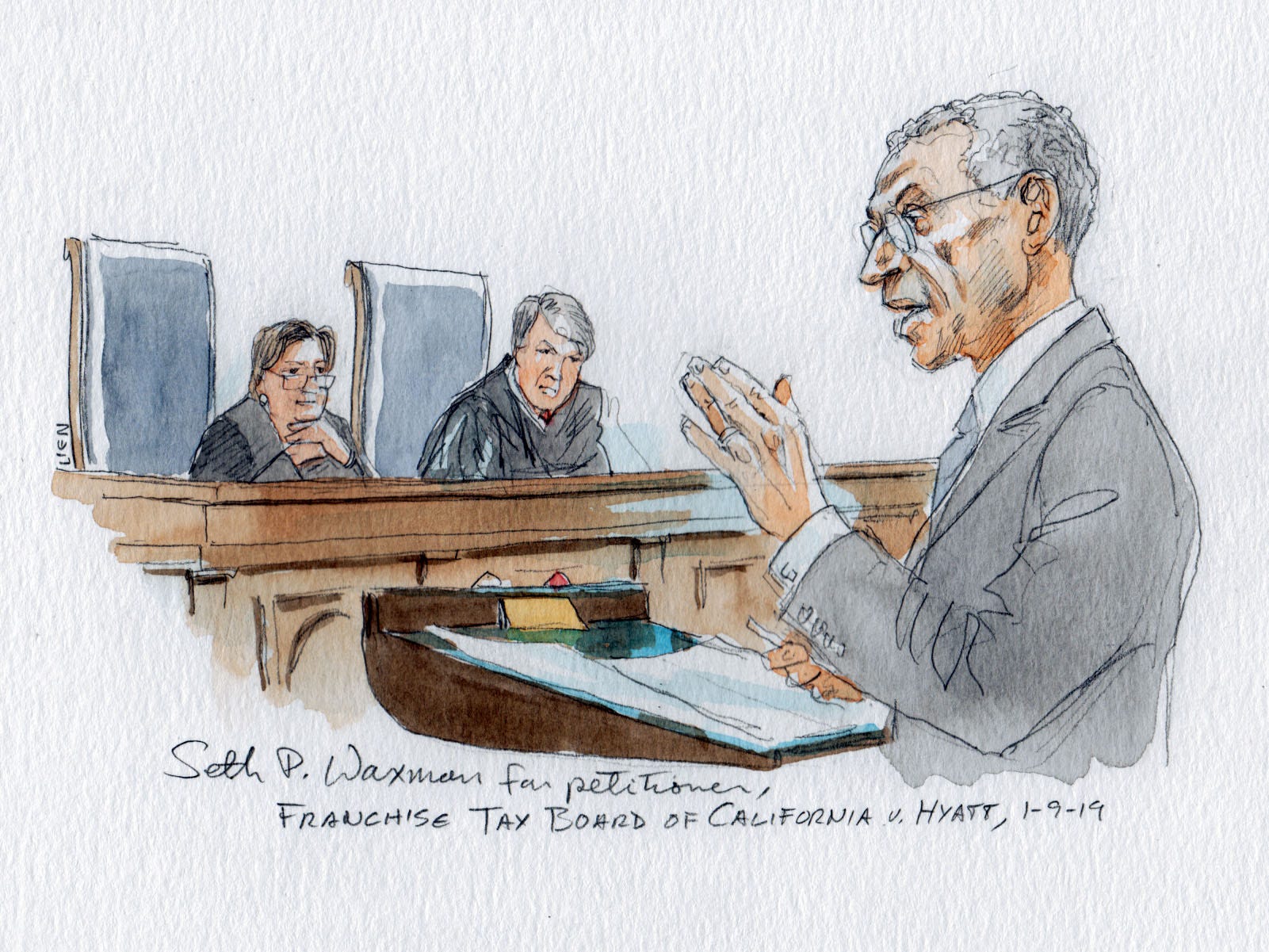
Supreme Court Preview
Issue: A conservative court returns
The Supreme Court is back for its new term, and the model’s read is blunt: the 6-3 conservative majority is favored to rule to the right on nearly every major case, from guns to immigration to voting. The lone contested call is a climate-liability case where the model sees a genuine toss-up.
Reasoning: A 6-3 majority is hard to overcome
The model is most confident on guns and immigration, with the Arizona voting case the closest of the conservative bets, where the law is genuinely less settled.
85%: The probability that the Supreme Court strikes down state-level assault-weapons bans as unconstitutional before July 1, 2027.
82%: The probability that the Supreme Court upholds the administration’s authority to deport noncitizens to third countries rather than their own before July 1, 2027.
68%: The probability that the Supreme Court rules that noncitizens arrested in the US can be held in immigration detention without a bond hearing before July 1, 2027.
55%: The probability that the Supreme Court allows Arizona to require documentary proof of citizenship to register to vote before July 1, 2027.
The exception is Suncor, where Boulder County is suing to hold the energy company liable for climate-change-related damages. Justice Alito’s surprise recusal makes a Boulder win more likely, but conservatives still outnumber liberals 5-3, keeping a Boulder-friendly ruling below 50%.
43%: The probability that the Supreme Court allows Boulder County’s climate-liability suit against Suncor Energy to proceed before July 1, 2027.
So what: The right wins, and markets lean with it
The through-line is that the VICO model expects the 6-3 conservative majority to hold across the term’s biggest cases. The practical results would be broader gun rights, a freer hand on immigration enforcement, and tighter voter-registration rules, which typically favor Republicans.
The clearest market read is Suncor. With Boulder favored to lose at 43%, the model effectively gives energy companies a 57% chance of beating back the climate-liability suit, which would lift an overhang that has long shadowed major oil and gas producers.
Midterms
At VICO we have also developed a Scenario Explorer tool that allows us to forecast future scenarios with quantitative probabilities of the scenarios happening. Going forward we are going to be publishing “Future Front Page” stories on our Future Monitor site. These imagined news stories draw on probability-based forecasts generated by the Scenario Explorer. Our editors select potential developments and bring them to life as narratives, helping readers understand how a scenario could unfold and what its consequences could be. Here are some future scenarios we have run for the upcoming midterms.
Issue: A Democratic sweep is the model’s base case
VICO’s single most likely outcome for the 2026 midterms is a Democratic sweep, with Democrats favored to comfortably take the House and narrowly win the Senate according to the VICO News Midterm Tracker.
The Senate margin would be especially thin: a projected 51-49 majority leaves no room for any defectors on key votes. That is an especially tall task given the path to 51 includes victories in traditionally red states where Democrats are running as moderates like Ohio, Alaska, and Texas.
What a sweep would mean
The highest-confidence consequence is oversight turning into impeachment. But the VICO model does not assume its target will be the president.
78%: The probability that a Democratic-controlled Congress impeaches a high-ranking executive official in the new Congress.
Impeaching a high-ranking official could allow Democrats to signal to their base without losing moderates who view presidential impeachment as too far.
The clearest market-moving call is energy.
65%: The probability that Democrats shield the clean-energy tax credits from repeal, sending the iShares Global Clean Energy ETF (ICLN) up 16 to 22% within nine months of the new Congress convening.
The oversight wave would bog down executive rulemaking, with industrial policy a prime target.
51%: The probability that Democratic committee chairs issue more than 60 subpoenas of the executive branch in the first 120 days.
40%: The probability that the House Oversight Committee subpoenas the CHIPS Program Office over Intel’s $8.5 billion funding deal and 9.9% equity warrant in the first 120 days.
The longer shot is foreign aid.
35%: The probability that Congress passes a $28.5 billion Ukraine and Taiwan aid package embedded in the FY2028 NDAA.
So what: Investigations, gridlock, and impeachment
A sweep would flip Washington to divided government. With no path for their agenda through the president, Democrats would focus on slowing his executive action rather than passing laws.
The sharpest market call is clean energy, where the 65% shield on the tax credits drives the model’s projected climb in ICLN. The oversight wave is the other market thread: a CHIPS-office subpoena over Intel’s deal would put a direct overhang on Intel (INTC), with the same scrutiny extending to USA Rare Earth (USAR).
Geopolitics: Russia Plague Case, French Protests and Elections, Russia x NATO
Russia Plague Case
Issue: A plague scare in Irkutsk
Fears of a new outbreak spiked after news of the death of a technician at the Irkutsk Anti-Plague Research Institute in Russia this week. The US has said it is monitoring the situation closely as Russian authorities put more than 200 people under medical observation.
Reasoning: The catastrophe case barely registers
The severe outcomes are long shots. The Russian government has reported no traces of plague found in any medical tests thus far, and historically incidents of this type tend to be one-offs according to the VICO model.
A continued quarantine is the only outlier. A wide precautionary net over hundreds of contacts is standard Russian practice regardless of whether the pathogen is ever confirmed.
55%: The probability that Russia places at least 500 people under quarantine or medical observation before December 31, 2026.
So what: No large deadly outbreak
The model sees almost no chance this becomes a mass-casualty event or spreads abroad, so the likely reality is a quarantine around what may not even be plague.
French Protests and Elections
Issue: A collapsing government, an ascendant far right
France is experiencing some of the largest student protests in decades, and PM Sébastien Lecornu has resigned. With French presidential elections set for April 2027, and an approaching debt crisis, the VICO model sees the chaos as fuel for the right-wing National Rally party.
The model’s read on 2027: Marine Le Pen is the clear frontrunner, with the far right set to surge in parliament and possibly the presidency.
Reasoning: Le Pen leads a fractured field
The model puts Le Pen far ahead of a scattered field, running a touch hotter than markets on her and more skeptical of the alternatives, Lisnard especially (8% versus the market’s 12%).
45%: The probability that Marine Le Pen wins the 2027 French presidential election. Versus Polymarket at 43%.
15%: The probability that Édouard Philippe wins the 2027 French presidential election. Versus Polymarket at 18%.
12%: The probability that Jean-Luc Mélenchon wins the 2027 French presidential election. Versus Polymarket at 13%.
8%: The probability that David Lisnard wins the 2027 French presidential election. Versus Polymarket at 12%.
The turmoil benefits the RN’s chances in parliament, which would hand it the national assembly and the presidency if Le Pen wins.
The fiscal backdrop is the stake, already among the worst in the EU.
58%: The probability that France’s general government deficit for full-year 2027 is reported above 5.5% of GDP.
So what: A Le Pen win is the market event
The crisis keeps French risk elevated either way, but a Le Pen presidency is the one that moves everything at once. Our Scenario Explorer assessment:
90%: If Le Pen wins, French 10-year OAT yields spike and the CAC 40 drops roughly 10%, led by banks BNP Paribas, Crédit Agricole, and Société Générale, on fears of financial repression and euro-area friction.
81%: If Le Pen wins, France vetoes ratification of the EU-Mercosur trade agreement and freezes its participation in joint Franco-German defense-industrial initiatives.
73%: If Le Pen wins, the deficit expands toward 7% of GDP and the agencies downgrade France, with S&P and Fitch cutting from A+ to A.
Even short of a win, the RN’s parliamentary surge and a deficit stuck above 5.5% keep pressure on French bonds and banks.
Russia x NATO
Issue: A Baltic flashpoint and a Black Sea front
This week Lithuania advanced a constitutional amendment to lift its ban on hosting nuclear weapons and foreign bases. President Trump responded by floating a permanent US base, and Russia warned of possible retaliation, all while Russian drones are sinking civilian ships in the Black Sea, one inside Romania’s waters. The VICO model’s read: escalation keeps building below the threshold of war, but the nuclear endpoint stays remote.
Reasoning: A likely repeal, an unlikely warhead
The Lithuania move is an escalation ladder, and the model sees the first rungs as likely but the top one as a long shot.
82%: The probability that Lithuania repeals its constitutional ban on hosting nuclear weapons and foreign military bases before 2028.
40%: The probability that the United States and Lithuania agree to establish a permanent American military base in Lithuania before 2028.
7%: The probability that NATO nuclear weapons are stationed in Lithuania before 2029.
Russia is likely to answer with posture, not war, most plausibly by moving more nuclear-capable systems to its western flank, with a cyber option in the gray zone.
So what: The hotter front is already at sea
The nuclear drama is the headline, but the live, near-certain escalation is in the Black Sea, where Russia is already hitting civilian shipping and squeezing the grain corridor.
The throughline: the confrontation ratchets up constantly below open war, while the real game-changers, warheads in Lithuania or a direct NATO-Russia clash, stay low.
Economics: September inflation, Google Nuclear deal
September Inflation
Issue: September inflation report lands October 14
September’s inflation report lands on October 14, the last major read before the Fed’s October 28 decision. The VICO model is less bullish than the market on high inflation this month on the back of a weak jobs report.
Reasoning: The data shows a cooling labor market
The model is more dovish than markets on the print, with the read that a weak jobs report and softening data signal cooling, enough to offset rising oil prices.
So what: Rate hikes delayed beyond October
A softer October 14 print pulls the October 28 hike off the table, a near-term relief for rate-sensitive assets, with the iShares 20+ Year Treasury ETF (TLT) the clearest beneficiary.
15%: The probability that the Fed raises rates in October. Versus Polymarket at 16%.
But the relief is likely short-lived. The model still sees a hike landing in December, so a soft inflation print buys time rather than keeping another 2026 hike away.
78%: The probability that the Fed raises rates in 2026. Versus Polymarket at 78%.
Google Nuclear Deal
Issue: A dealmaking boom, a delivery lag
Google’s October 6 agreement with Constellation to add 890 MW of nuclear capacity is the latest in a wave of Big Tech nuclear deals aimed at powering AI. The model sees that wave accelerating, but with energy delivery timelines that prevent a short-term supply boon.
Reasoning: Signatures now, power later
Dealmaking is close to a sure thing, with more capacity committed fast.
Delivery is the lag. Even the fast path of uprates (increasing the maximum power of existing reactors) takes years to arrive.
42%: The probability that the first nuclear uprate under the Google-Constellation deal comes online before 2029.
So what: More deals are coming, but not near-term power for data centers
The wave keeps building, yet almost none of it is supply a data center can actually draw on soon. Another deal is likely within months, while the reactors meant to deliver real scale are a decade out.
That gap favors the operators who can deliver this decade through uprates and restarts, Constellation Energy (CEG) and Vistra (VST), over the SMR developers whose power is a 2030s story.
About Us
VICO empowers decision makers to quantify and navigate event risk. Forecast, simulate and monitor political, geopolitical and economic events.
Learn more and obtain a beta account at www.vico.io or email us at inquire@vico.io
Methodology and Copyright Notes:
All percentage changes are over the last week except where noted.
Our proprietary AI models are rigorously backtested and do not rely on any betting market information.
All data and content are owned by and copyrighted by VICO Technologies Inc.