This story and its forecasts were created by the VICO AI model and edited by the VICO editorial team.
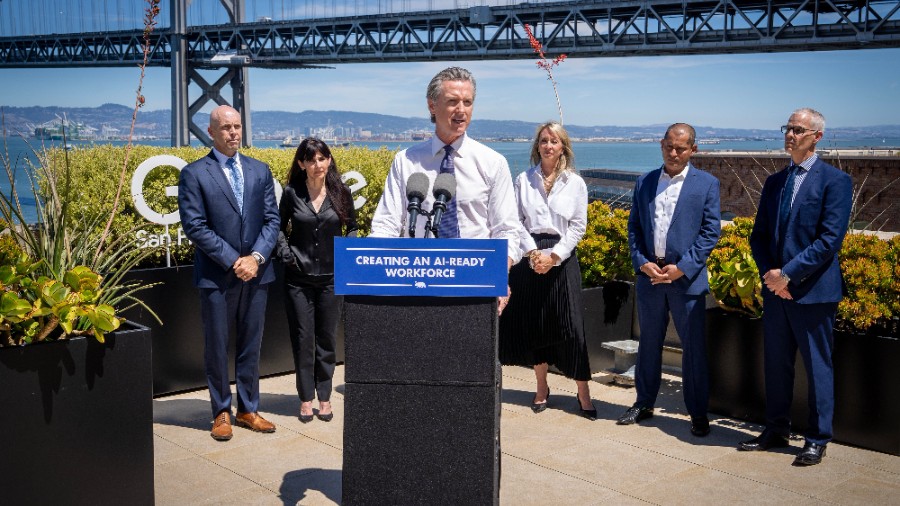
ISSUE: A stack of AI bills lands on Newsom's deskCalifornia's legislature sent Governor Newsom a wave of AI bills, and he has until September 30 to act. With no pocket veto in California, an affirmative veto is the only way any of these dies. Newsom has blocked tech regulation he saw as bad for the state before, but broad political support and his own presidential ambitions cut the other way, and the VICO model expects these four to become law.
REASONING: Low veto odds, then a federal challengeThe model sees every bill more likely than not to survive. Even where big tech is lobbying hard, public appetite for regulating AI is strong, and a governor with national ambitions has little reason to spike popular child-safety and worker-protection bills. The support shows in the margins: SB 867's toy chatbot ban cleared the legislature 39-0. That is why veto odds sit low across the board. Even SB 1119, a chatbot child-safety bill which OpenAI CEO Sam Altman reportedly contacted Governor Newsom directly about, sits at just 32%. But passage is not the end: if all four become law, the model puts the odds of a DOJ challenge within six months at 52%.
FORECASTS: What the model says—
9%: The probability that Governor Newsom vetoes AB 1709 (social media versions for minors).
—
22%: The probability that Governor Newsom vetoes AB 1883 (workplace AI surveillance).
—
24%: The probability that Governor Newsom vetoes SB 867 (companion chatbots in toys).
—
32%: The probability that Governor Newsom vetoes SB 1119 (chatbot child-safety).
— 52%: The probability that the DOJ challenges the California AI laws within six months if all four pass.
SO WHAT: The first big AI regulator arrivesThe country's largest state economy, and home to most tech companies, is about to become the first major regulator of AI, and the costs are concrete. Social platforms would build separate under-16 products stripped of the feeds and autoplay that drive ad revenue, toymakers would pull chatbot products, employers would rip out emotion-tracking tools, and chatbot makers would carry new safety and liability exposure. For consumer-facing AI and platform names, that is real margin pressure to price in now, especially since California often sets the national standard. But litigation is likely to test whether or not the rules stand.